Showing posts with label Galway. Show all posts

Monday, 13 August 2012

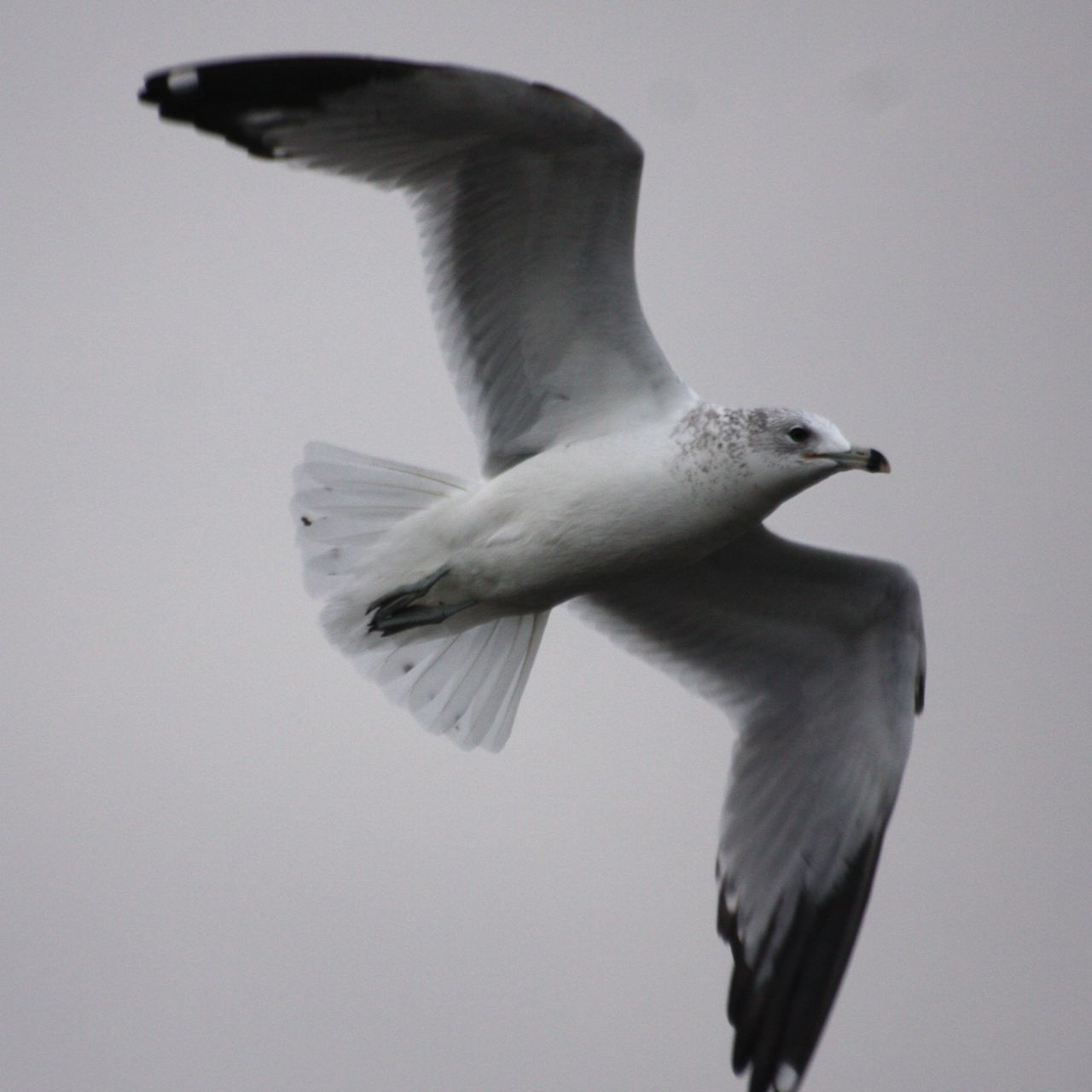
Something about Ring-billed Gulls


There is something in the way she moves, 
attracts me like no other guller

as Harrison might have written in his classic song. Had he been writing about Ring-billed Gulls rather than lovers. And had he been Peter Harrison of Seabirds fame rather than George Harrison of Beatles fame, perhaps.

Anyway, Ring-billed Gulls do have a distinctive gait. They hold their heads high and stride forward on long legs.


Further proof that it may just have been Peter Harrison that penned Something is found in the third verse, which appears to urge all gull watchers to be optimistic yet also realistic...

Stick around, and it may show,
But I don't know, I don't know


Tuesday, 31 January 2012

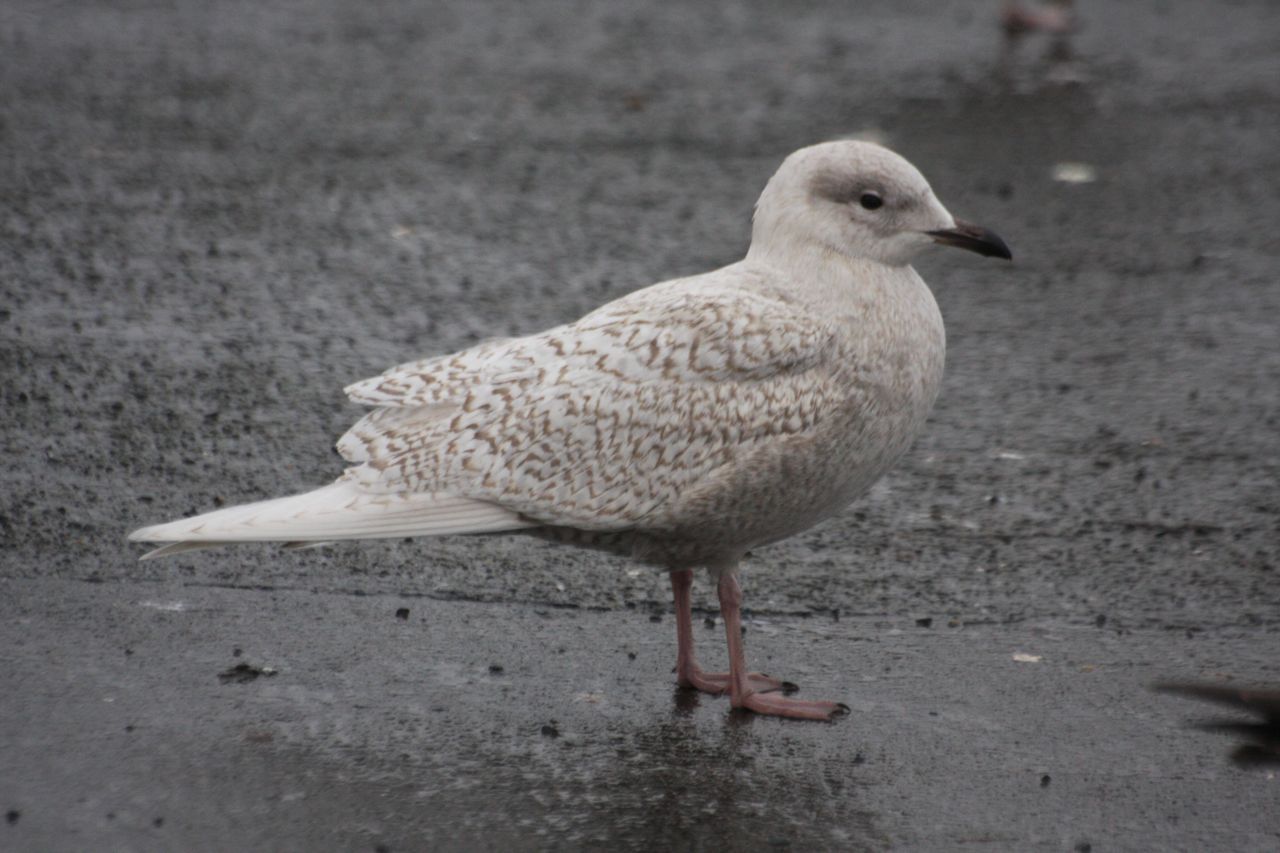
1st winter Iceland Gulls, Galway

With at least 8 Iceland Gulls being reported at a landfill site in West Lothian today, maybe the Iceland Gull invasion is about to reach us in Edinburgh. There have only been a couple of reports of singles along the coast, but it would be great to catch up with this species again soon. In the meantime here are some pictures of a variety of first winter birds from Nimmo's Pier in Galway at the beginning of the month.


This last bird is a nice dark, coarsely marked individual.

Although I have not managed any Icelands in Lothian this year so far, I did manage a couple of larid year ticks last weekend - Kittiwake and Little Gull both viewed distantly feeding at the sewage works outfall at Seafield. Best bird of the weekend, however, was the female Blackcap that appeared in the garden in time to be logged for the garden birdwatch - the first I have seen there all winter!

Friday, 20 January 2012

2nd winter Iceland Gull, Galway

Like many of the Iceland Gulls of this winter's invasion into north-western Europe, this big 2nd winter bird was clearly hungry and showed little fear of me. Almost Glaucous Gull-like in character, I assume from its size that it was a male bird.


Tuesday, 17 January 2012

2nd winter Ring-billed Gull, Galway

Having seen the adult Ring-billed Gull, I was scoping Galway Bay briefly with Dermot Breen. I commented that I was hoping to find one in Lothian. His comment was pretty much, "Oh funnily enough, here's one!" And there it was right in front, a cracking 2nd winter Ring-billed Gull. Sometimes I really wonder how much I miss...

I watched the bird through the scope for a good while, trying to etch its image into my brain. I am really hoping to put this search image to good use. After absorbing these distant views I wandered onto the upper shore and threw some bread to see if it would come any closer... From these photos, you can see that it did. Looks like a male to me, with that heavy bill.


This bird was seen at Waterside later on by Tom Cuffe. He noticed that it had unusually blue legs. How cool!

Friday, 13 January 2012

3rd winter Iceland Gull in Galway

Still working through my collection of Iceland Gull photographs from the recent trip to Galway. The invasion is really concentrated in the Faroes and the Northern Isles. Hopefully I'll manage to find another in Lothian over the next few weeks...

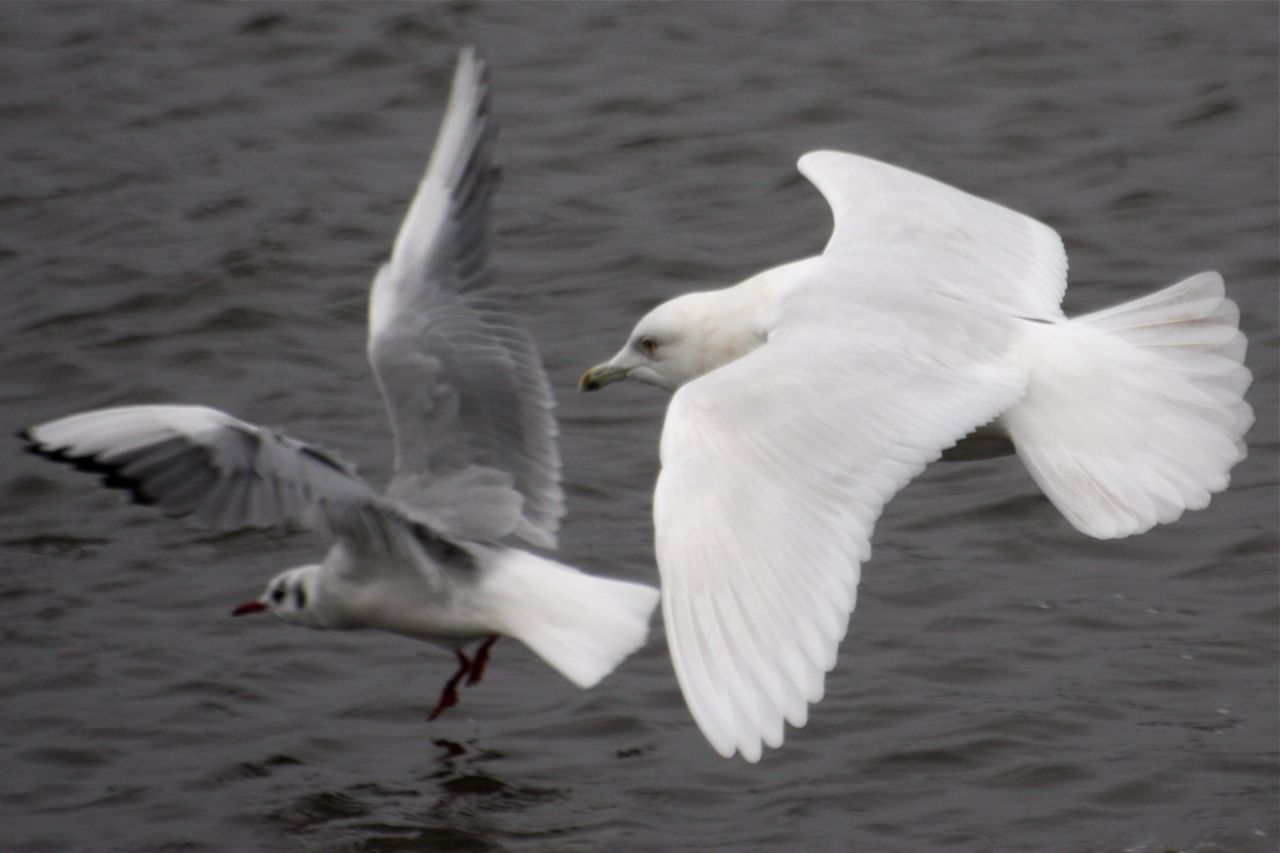
Here is the first of the Iceland Gulls from one week ago. It was waiting for us on Nimmo's Pier and the whole family managed to see it without getting out of the car - which is just as well because they wouldn't have seen it otherwise! I saw it on three occasions over the next 24 hours and it was ther nearest to adult plumage that I saw on the trip - only a little brownish feathering on the breast and tail and the sub-adult bill pattern giving its age away. A very pale gull, it looked large and ghostly in flight.


Tuesday, 10 January 2012

It's a ringer: adult Ring-billed Gull in Galway

I bumped into Tom Cuffe while I was birding Nimmo's Pier on Saturday morning. We discussed the various white wingers and then I remarked that I was surprised that I hadn't connected with a Ring-billed Gull the previous afternoon. "Oh there is normally one down there", he said, pointing to some exposed rocks towards the mouth of the harbour. I trained my scope on the area and, sure enough, there it was! Cheers, Tom. We sauntered down and I gawped and threw some bread. For Tom, being local, a Ring-billed Gull barely warrants a second glance.


After looking at my photos I realised that I had also seen this bird before - in December 2010 (it is bird 2 in this post). Not only is the ring on the beak of similar width and shape and the head streaking very similar in density and distribution, but the shorter than normal tail feather (left T2) is identical. I had assumed that the uneven tail growth was some one-off feature in December 2010, but it seems to be consistent from year to year despite the fact that it should have moulted its tail at some point in the last 12 months... (cant find anything on this in Gulls of the Americas or Molt in North American Birds, but I haven't checked Gulls or BWP yet). Perhaps this feather is simply the last one to be replaced by this bird?

So here are some comparison shots of Dec 2010 on the left and Jan 2012 on the right:


So, no sign of any improvement in my photography in 12 months!


Here are a few more shots taken last Saturday. A great bird, in my opinion, and one I am keen to find locally. Might take a wee while in Lothian...


The following shots show details of wing-tip pattern and extent of head streaking.


Friday, 25 February 2011

Hooded Crow - Galway Bay

Unlike many, I'm quite a fan of crows. Yesterday's post of a hybrid reminded me that I took some shots of a pure Hooded Crow at Galway Bay in December. From field views, I had always assumed that a Hoodie has clear grey uppertail coverts - but it seems not, instead they are dark centred. Maybe this increases the apparent length of the bird's tail, or makes it more difficult for other birds to judge the Hoodie's size?


Thursday, 20 January 2011

Second (and first) winter herring gulls (oops!)

Well if that isn't a great headline I don't know what is...

Thought that since the blog had already strayed into a few areas of impossibly speculative identifications this week (e.g. Nordic Jackdaw and Mealy Redpoll only yesterday) then I may as well post these pictures of second winter Herring Gulls photographed at Nimmo's Pier, Galway, on 28 December. My aging and subspecific identification of these Herring Gulls is tentative, as there is a bewildering array of plumage types and patterns out there...

This first bird is possibly of the northern argentatus subspecies as it was a bulkier bird in direct comparison to other similarly aged birds (though maybe it is just a large male?) and it has heavily marked scapular feathers. Its wing coverts were unusually uniform in colour and a little more bleached compared to most others. How common is that?

Hmm... I am now beginning to wonder whether I have aged this bird correctly. I aged it as a second winter based on the heavily worn rounded tips to the primaries. However, looking at almost all other features of the plumage, it appears to be a first winter and now that I have considered it as a first winter - it seems perfect, and the primary tips on closer inspection are slightly pointed. So, scratch the comment above, this is not an unusual second winter with retained juvenile coverts, it is a first winter that appears to have more abraded primaries than normal. Ok... let's move on...

The next bird was only seen in flight but had a grey background colour, a finely barred rump and fairly uniform wings. I think that it has been suggested that birds with this plumage could be reasonably common among the Icelandic argenteus population, but that they are not restricted to that area. It is also possible that some argentatus may look like this. Any ideas?

I enjoyed photographing the next bird, which caught my eye as it had a slightly more advanced moult of its silvery mantle feathering and a whiter head. I think that it may be from a less northerly population to have progressed its moult - although of course there is much individual variation - but I'm going to guess its a local argenteus bird. It also showed a darker and more finely vermiculated greater covert bar than most of the other birds in the group and a strongly dark leading edge of the wing - both characters are shared with the bird above.
Enough for now... If you know more about large white-headed gulls than me, which is quite likely, then please do drop me a line and maybe I could add some more informative captions!